
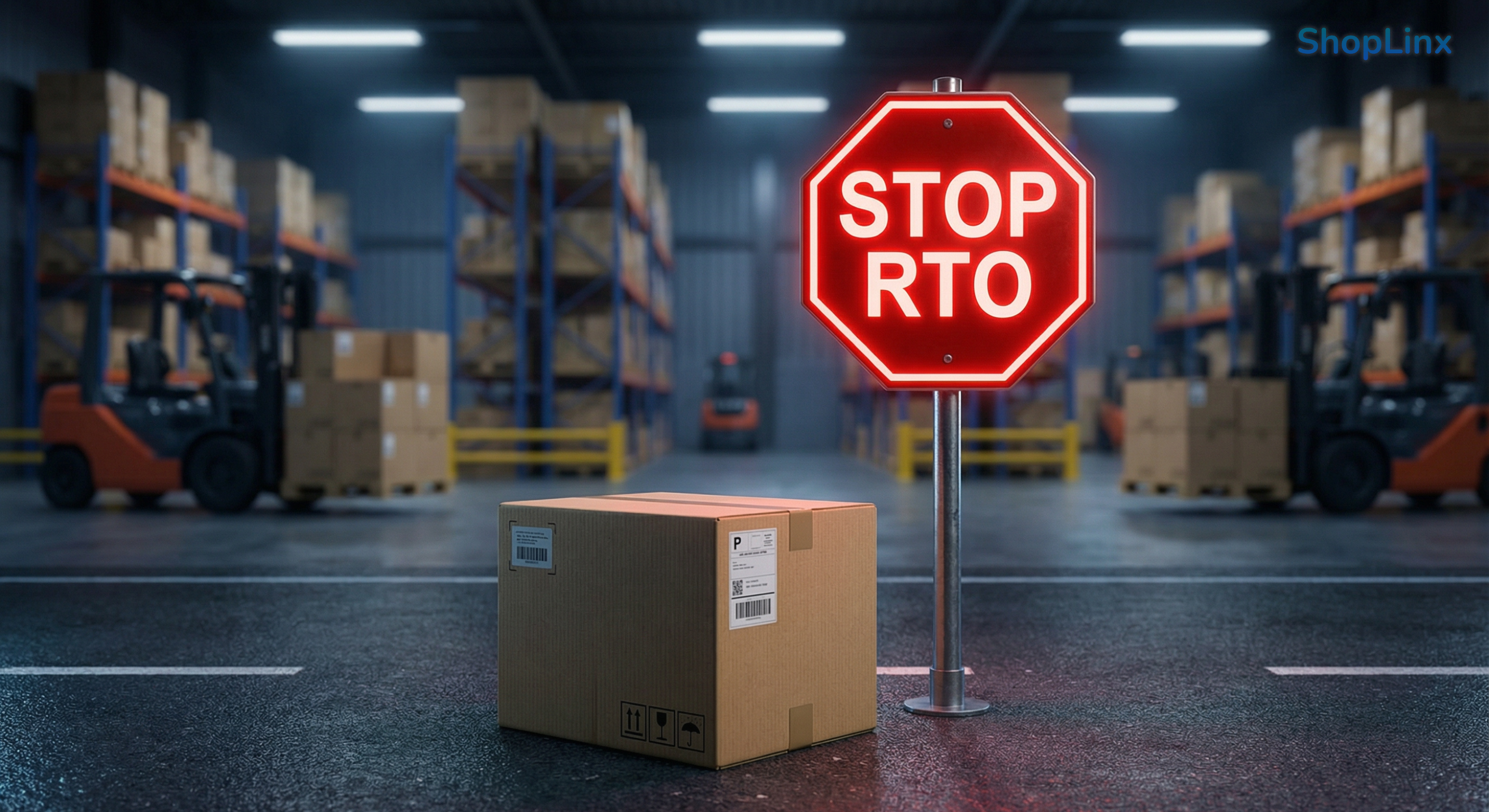
E-commerce Growth 9 min read
Every D2C founder in India knows that specific dopamine rush when the Shopify app notifies you: "Cha-Ching! New Order Received - ₹1,499 (COD)."
You feel great. Your marketing worked. Your ad copy was perfect. You pack the product with branded tissue paper, add a personalized thank-you note, and ship it out within 24 hours.
But 5 days later, that excitement turns into frustration. You check the courier dashboard, and there it is, the dreaded status:
Tags
❌ "Delivery Failed: Customer Refused Order."
❌ "RTO Initiated."
You spent money on ads and successfully optimized your store for Shopify abandoned cart recovery, but all that effort goes to waste if the product returns to your warehouse.
Welcome to the harsh reality of Indian E-commerce. In 2026, Cash on Delivery (COD) still accounts for 60-70% of all online orders in India. While offering COD increases your conversion rate, it brings a massive headache: Returns to Origin (RTO).
The industry average RTO rate for COD orders in India sits anywhere between 30% to 40%. That means out of every 10 orders you ship, 3 or 4 are coming back to your warehouse.
Most founders accept this as "part of the business." But here is the truth: RTO is not just a logistics problem; it is a Profit Killer. If you are blindly shipping every COD order without verification, you are essentially gambling with your working capital.
In this guide, we won't tell you to disable COD (because that will kill your sales). Instead, we will show you how to filter these orders using WhatsApp COD Verification—a strategy that is helping smart brands reduce RTO by over 30%.

Many founders think, "Oh, the customer returned the product. I only lost the shipping money, right?"
Let's break down the "Math of Loss" for a typical Indian D2C Brand.
When an order returns, here is what you actually pay:
🔴 Total Loss on 1 RTO = ₹320.
Look at the numbers closely. You make ₹300 profit on a successful sale. But you make a ₹320 LOSS on a returned order.
This leads to a terrifying conclusion:
If your RTO rate is 30%, it means nearly one-third of your marketing budget is being used just to ship products back and forth across India. This is why many brands scale their revenue to ₹1 Crore but still end up with zero profit at the end of the month.
The problem isn't your product. The problem is your Process. So, how do we stop this bleeding? The old-school answer was "Call the customer." But in 2026, that method is officially dead. Let's see why.
For years, the standard advice given to every new E-commerce founder was: "Hire a team and call every customer to confirm the order."
While this worked in 2020, it is a failing strategy in 2026. Here is why reliance on manual calling or IVR (Automated Calls) is actually hurting your brand.
In India, spam calls are at an all-time high. Everyone has Truecaller installed. When your support executive calls from a random mobile number or a landline to confirm an order, your number likely shows up as "Spam" or "Unknown Business".
Imagine your customer is in a meeting, a college lecture, or driving. They placed the order 2 hours ago during a break. Now, you are calling them. They reject the call. You call again. Now they are annoyed. An annoyed customer is less likely to buy. Phone calls demand synchronous attention (pick up NOW), which the modern Gen-Z and Millennial consumer hates.
Let's talk numbers again.
If phone calls are "intrusive," WhatsApp is "conversational." Switching your COD verification to the official WhatsApp Business Platform (API) changes the game completely. Here is why 500+ D2C brands have moved to WhatsApp Verification:
Emails get ignored. SMS is dead. But WhatsApp? People check WhatsApp 25 to 50 times a day. When a message pops up saying "Please confirm your order for the Blue Sneakers", it gets read within 3 minutes.
Unlike manual calling (which has a delay), ShopLinx Automation sends the verification message 5 seconds after the order is placed on Shopify. The customer is still holding their phone. They are still in the "buying zone." Asking for confirmation immediately locks in that commitment before buyers' remorse sets in.
This is where the magic happens. We don't ask the customer to type "Yes". We give them clickable buttons:
You might be thinking, "This sounds great, but I'm not a techie. How do I set this up?" The good news is, with tools like ShopLinx, you don't need to write a single line of code. It takes about 15 minutes to go live.
While there are many WhatsApp automation tools in the market, you need one that specifically supports COD verification workflows like ShopLinx.
Here is the exact workflow you need to configure:
Log in to your ShopLinx dashboard and connect your Shopify store. Then, link your Facebook Business Manager to enable the Official WhatsApp API.
Go to the Workflows tab and select the pre-built template for "COD Order Confirmation".
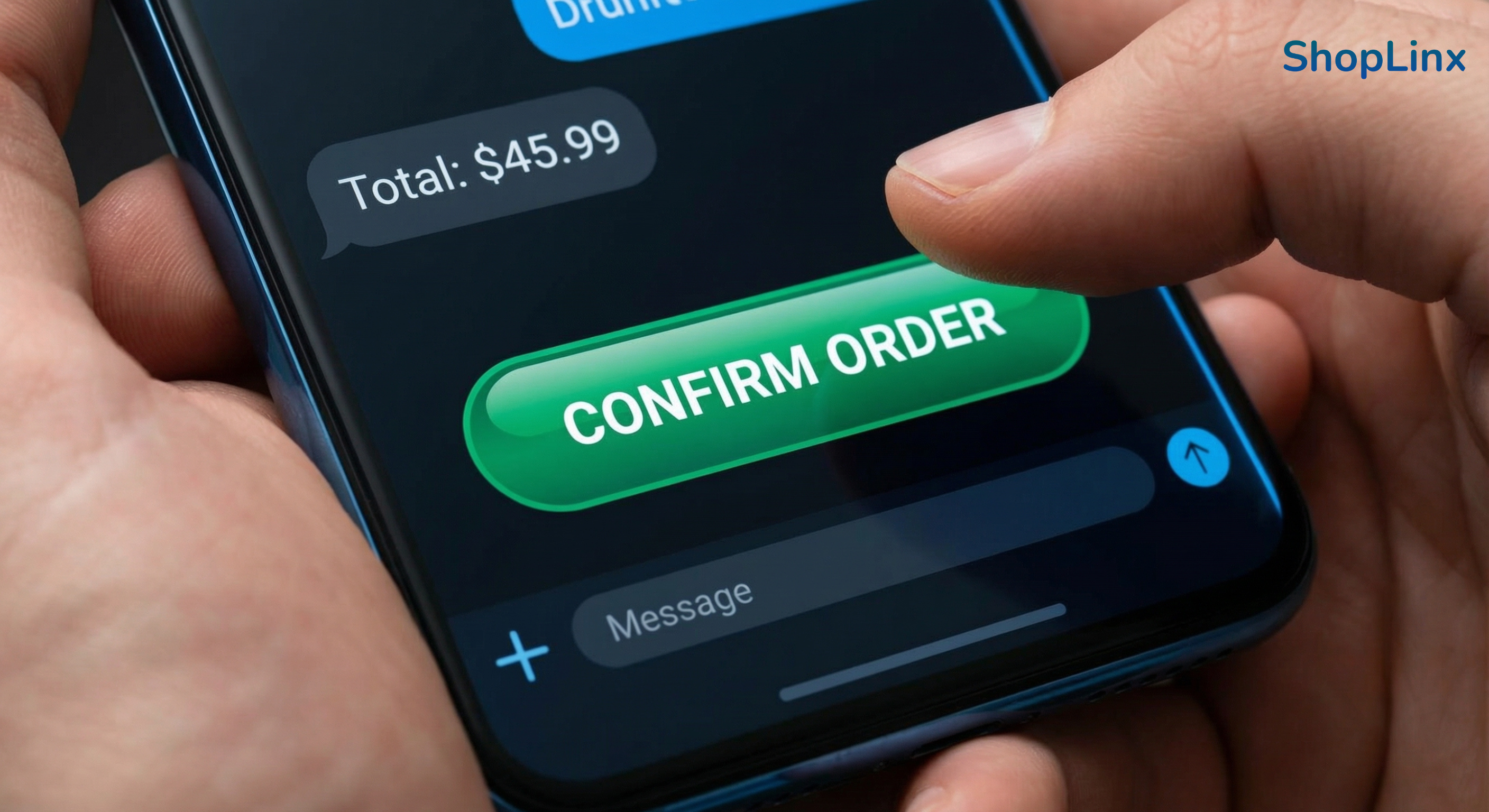
Use a template with interactive buttons.
This is where ShopLinx saves your team's time. You can set rules based on the customer's click:
• If "Confirm" is clicked: The system automatically adds a tag "Verified*COD"** to the order in Shopify.• If "Cancel" is clicked: The system auto-cancels the order and restocks the product. Tag added: "CancelledbyUser".• If No Reply: The system waits 24 hours and sends one follow-up message. If still no reply, it tags the order as ****"Suspected***Fake".
Simple. Efficient. Profitable.
Want to kill RTO completely? The best way is to make the customer pay before delivery. You can use the WhatsApp Verification message to upsell a prepaid offer.
Indian shoppers love discounts. By offering a small incentive (which is usually less than your RTO loss cost), you can convert 15-20% of COD orders into Prepaid instantly via WhatsApp.
You just saved money and secured cash flow instantly.
For too long, Indian D2C brands have accepted high RTO rates as the "cost of doing business." In 2026, with technologies like ShopLinx Automation, high returns are a choice. You can choose to suffer losses, or you can choose to filter your orders intelligently.
If you are shipping 1,000 orders a month, reducing your RTO from 30% to 15% adds lakhs of rupees directly to your bottom line.
Stop shipping blindly. Start verifying smartly.