
Inventory Management 9 min read
It's 11:30 PM. You are running a heavy discount Flash Sale on your Shopify store. The traffic is high, and orders are flowing in. You are feeling good.
Then, your phone buzzes with a notification:
Tags
Two seconds later, another notification pops up:
You freeze. You realize you only had one single piece left in that specific red color.
Both customers have paid. Both have received an "Order Confirmed" message. But only one can actually get the product.
Now comes the most embarrassing part of being a D2C founder: You have to pick up the phone, call a paying customer, and say, "I am so sorry, we messed up. I have to refund your money."
This phenomenon is called Overselling.
For a hobbyist seller, this is a small mistake. But for a growing D2C brand, this is a disaster. It breaks trust, ruins customer experience, and creates operational chaos. If you are managing your inventory manually on Excel sheets or mental notes while selling on multiple channels (Instagram, WhatsApp, Website), this nightmare is not a matter of if, but when.
In this ultimate guide, we will dissect why manual inventory management is silently killing your growth and how Real-Time Inventory Sync is the only way to prevent overselling on Shopify and scale your operations in 2025.
Most business owners treat overselling as a minor "operational hiccup." They think, "It's okay, I'll just refund the money, and no harm is done."
This is a dangerous misconception. When you analyze the numbers, an oversold product costs you much more than just the product price. Let's look at the hidden costs that bleed your profitability.
You didn't get that customer for free. You likely ran Facebook or Instagram Ads to bring them to your store. Let’s say your Customer Acquisition Cost (CAC) is ₹500. When you refund the order, you aren't just returning the sale amount; you are effectively burning that ₹500 note. You paid Facebook to bring you a customer that you had to turn away. That money is gone forever.
Here is a technical detail many forget: When a customer pays you ₹1000 via a payment gateway (like Razorpay, Stripe, or PhonePe), the gateway charges a fee (MDR) of around 2%. However, when you initiate a refund, many gateways do not refund that transaction fee. You are literally paying a penalty out of your own pocket for making a mistake.
A disappointed customer is three times more likely to leave a review than a happy one. When you cancel an order due to "Out of Stock," the customer feels cheated. They might post a screenshot on their Instagram Story or leave a 1-star review saying, "Unprofessional brand. Took my money and then cancelled." Social proof is the currency of D2C. One bad review can deter ten future customers.
Time is your most valuable asset. Instead of planning your next marketing campaign or packing legitimate orders, your support team is wasting hours:
If you were running a physical shop in 1990, inventory was easy. You looked at the shelf; if the product was there, you sold it. If not, you didn't.
But modern D2C brands don't work like that. You are likely an Omnichannel Brand, meaning you sell on:
This is exactly why manual multi-channel inventory management fails—because these channels operate in silos and don't talk to each other. They are "strangers" to each other. Your Instagram DM inbox has no idea what is happening on your Shopify dashboard.
This is where manual management collapses. Let's break down the timeline of a manual sale to understand the danger:
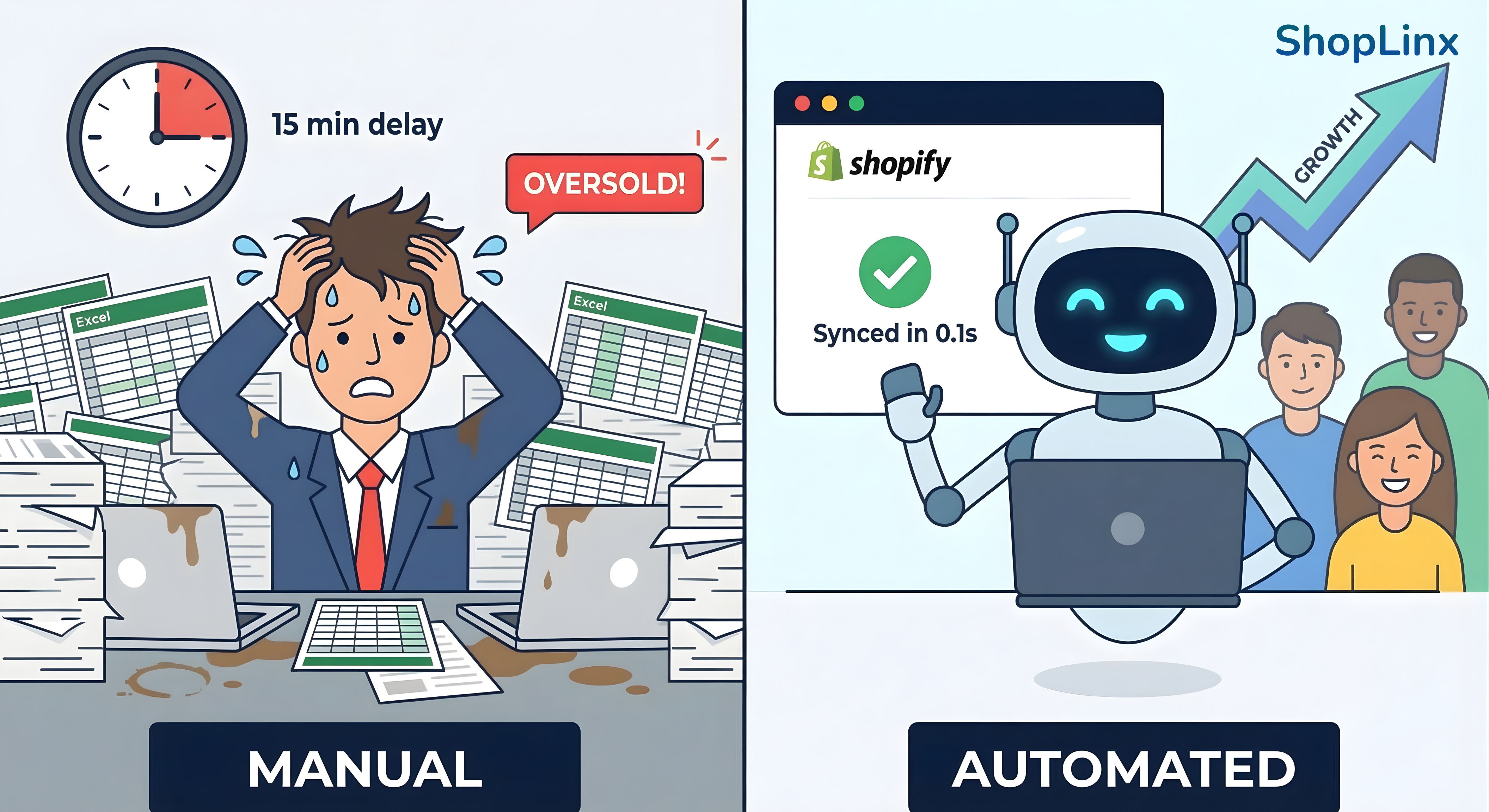 Result: You sold 3 units. You only had 2.
That gap between 10:05 AM (Actual Sale) and 10:15 AM (When you finally update Excel/Shopify) is called Inventory Lag.
In manual operations, this lag is usually 15 to 60 minutes. During a flash sale or a viral reel, even a 1-minute lag is enough to cause overselling. You simply cannot type fast enough to beat the speed of digital transactions.
So, how do we eliminate "Inventory Lag"? We remove the human from the process.
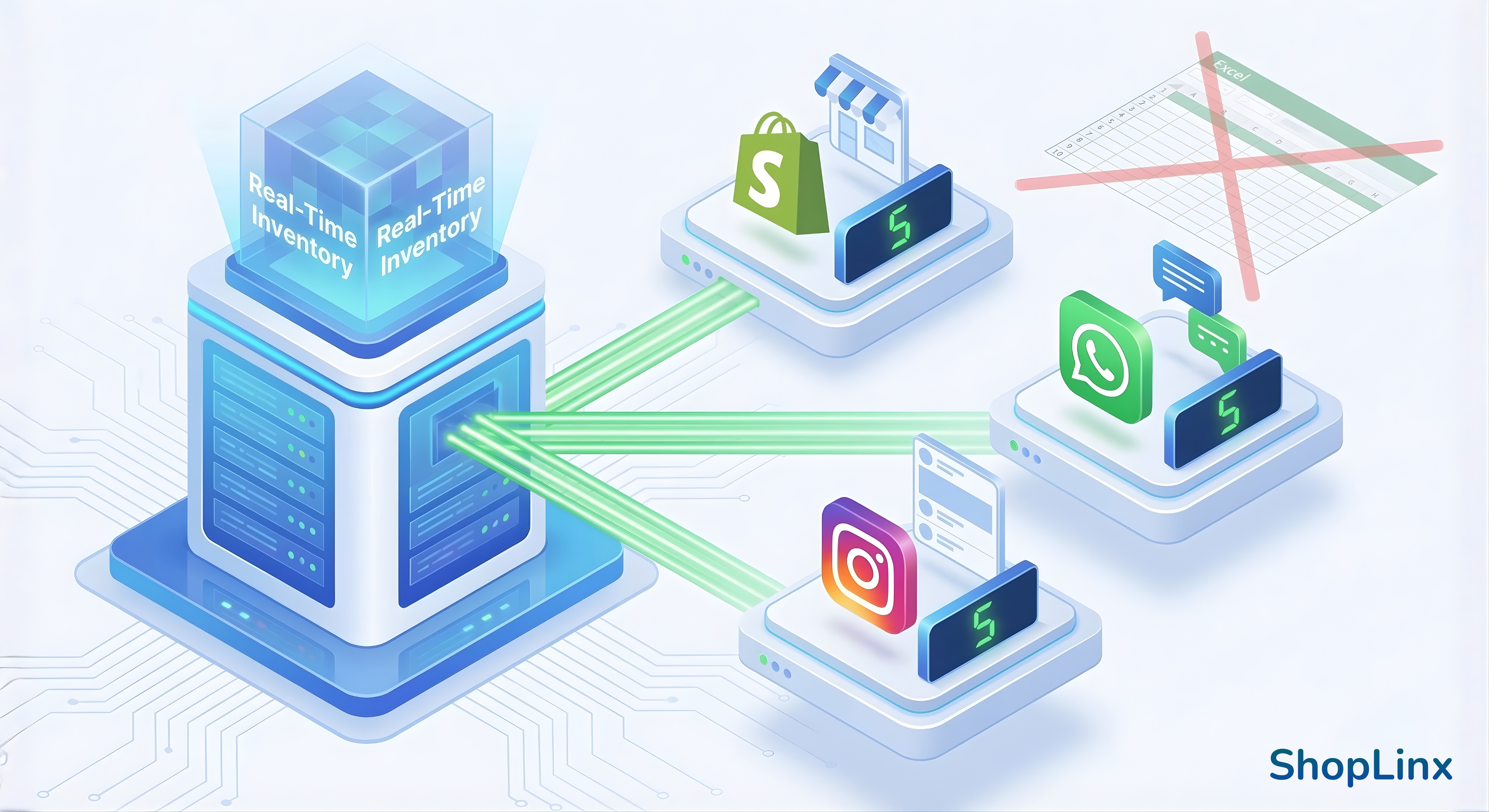
ShopLinx Real-Time Inventory Sync is an automated system where your chat platforms (WhatsApp/Instagram) act as direct extensions of your central warehouse (Shopify).
Think of ShopLinx as the "Central Nervous System" of your business. It connects the brain (Shopify) to the limbs (Sales Channels).
You don't need to be a coder to understand this. Here is exactly what happens in the background when you use ShopLinx:
Step 3: The Action (Instant Decision) This happens in milliseconds:- Scenario A (In Stock): Shopify replies "Stock is 5". The Bot replies to the customer: "Yes! It's available. Click here to buy."- Scenario B (Out of Stock): Shopify replies "Stock is 0". The Bot replies: "Sorry, this size is currently sold out. Would you like to check Size L?"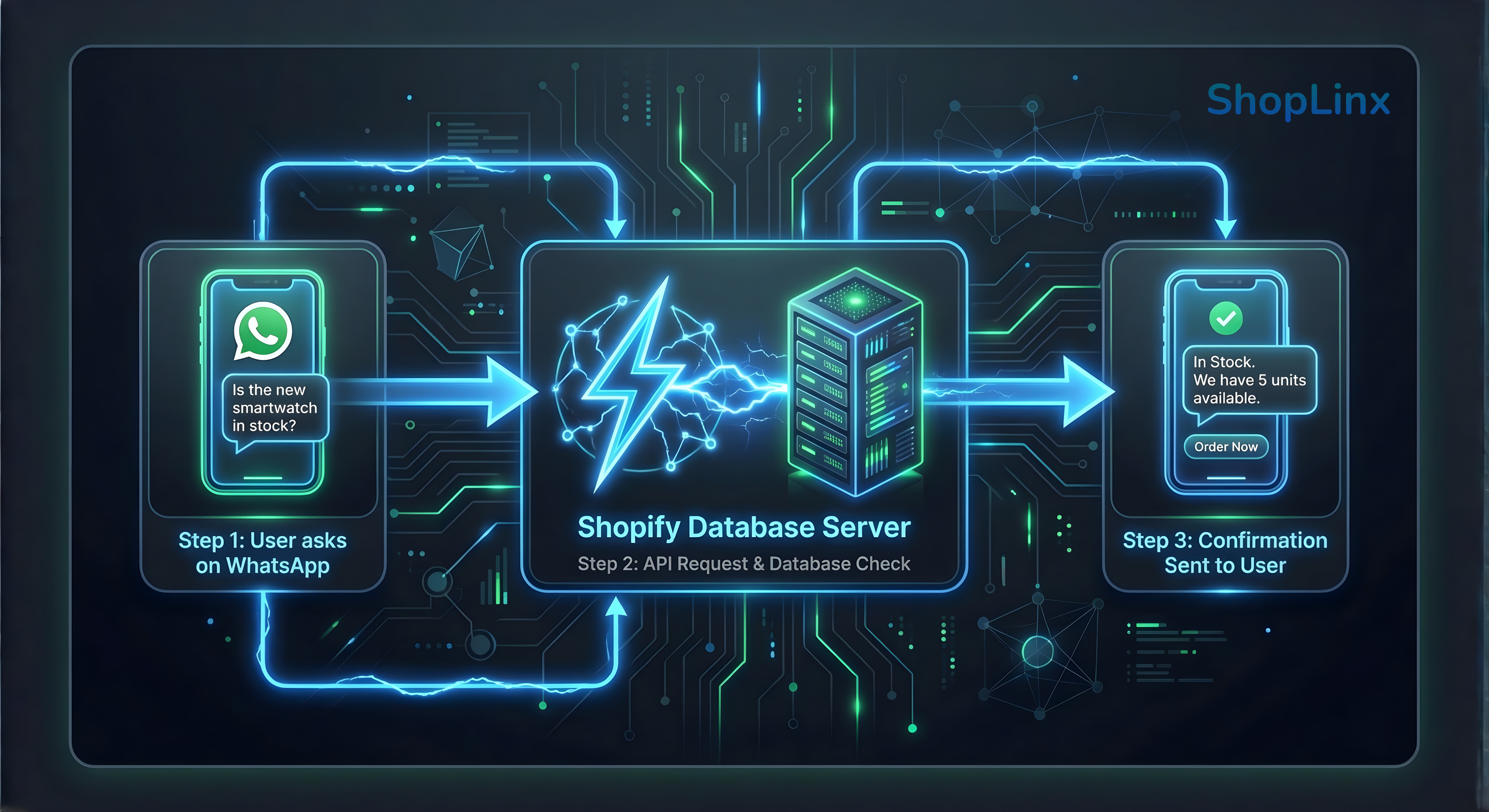 #### Why "Real-Time" Matters
Notice the difference? In the manual method, the stock update happens after you find time. With ShopLinx, the check happens during the conversation.
If someone buys the last piece on your website at 10:00:01 AM, and a WhatsApp customer asks for it at 10:00:02 AM, the bot will already know it is gone.
This Zero-Lag Architecture is the only way to guarantee 100% accuracy and prevent the embarrassment of overselling.
Data speaks louder than opinions. Let's compare the operational difference between manual work and using automated stock updates via ShopLinx.
| Feature | Manual Management (The Old Way) | ShopLinx Real-Time Sync (The New Way) |
|---|---|---|
| Stock Accuracy | 60-70% (High chance of human error) | 100% (Direct API Sync) |
| Update Speed | 5 to 15 Minutes (Inventory Lag) | Milliseconds (Zero Lag) |
| Overselling Risk | High (Especially during Flash Sales) | Zero (System blocks purchase if stock is 0) |
| Night Sales | Impossible (You can't check stock while sleeping) | Works 24/7 (Bot checks stock automatically) |
| Customer Experience | Frustrating ("Wait, let me check for you...") | Instant & Professional ("Yes, it's in stock!") |
| Scalability | Limited (You can't type faster) | Unlimited (Handle 10,000+ queries instantly) |
As you can see, staying manual isn't just slower; it limits your ability to scale. You cannot grow a business if your "growth" depends on how fast you can type.
While the primary goal is to prevent overselling on Shopify, Inventory Sync is also an offensive weapon for sales.
When your chatbot knows exactly how much stock is left, it can use that data to influence buyer psychology.
Here are two advanced strategies ShopLinx users leverage:
Scarcity creates demand. But fake scarcity (saying "Hurry!" when you have 1000 units) destroys trust.
With Real-Time Sync, you can create honest urgency.
Because this data is real, the customer feels the pressure to buy now rather than later. This simple nudge can increase your conversion rate by up to 20%.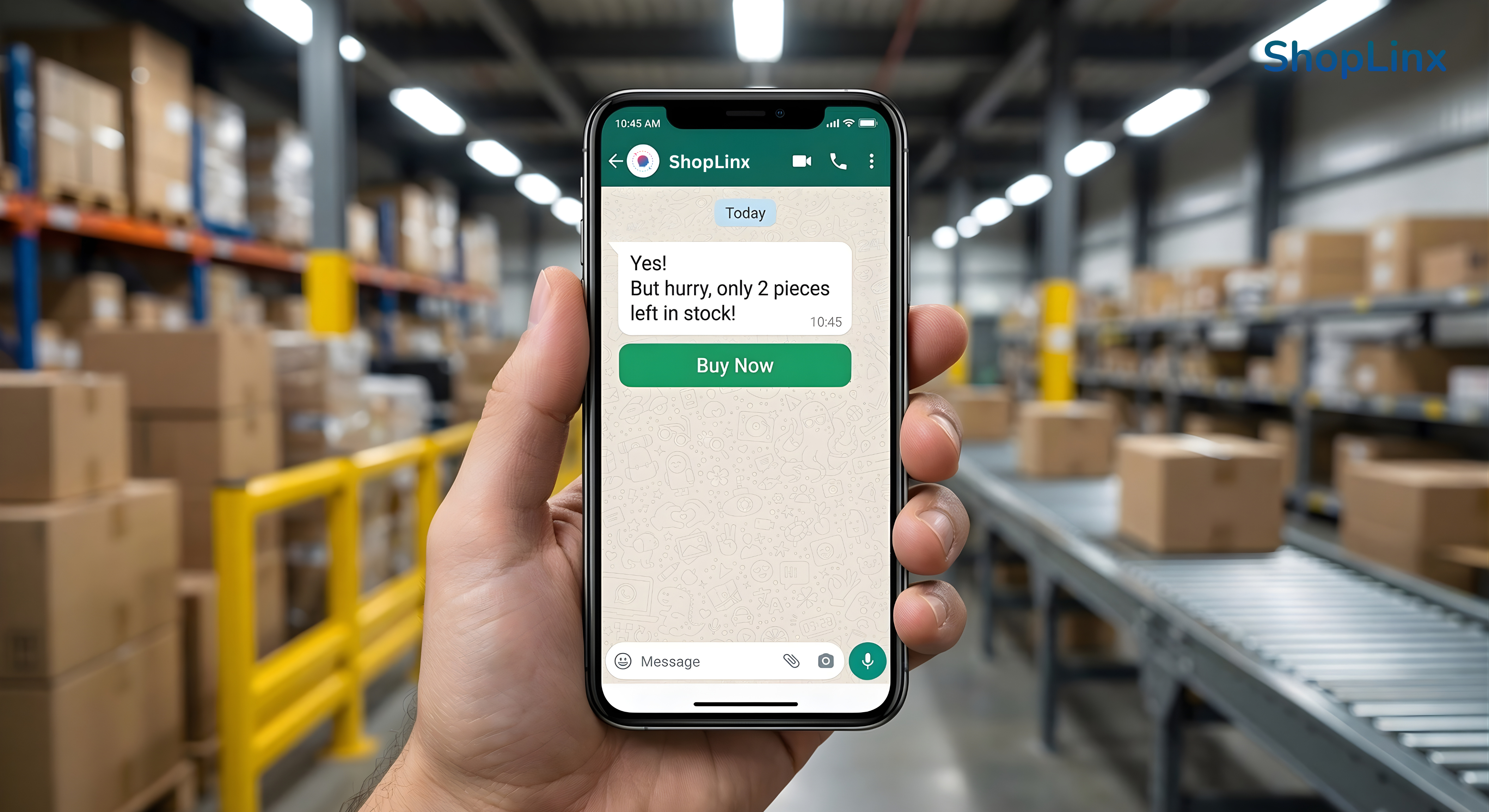 #### Strategy B: The "Back-in-Stock" Automation Loop
What happens when a customer wants a product that is legitimately sold out? Usually, you lose that sale.
But with ShopLinx, you can capture that demand.
This turns a "Lost Sale" into a "Recovered Sale" without you lifting a finger.
Let's look at a typical scenario of a growing Fashion Brand (let's call them "StyleHub").
During their End of Reason Sale, StyleHub would get flooded with DMs. The founder and two interns would stay up until 2 AM answering queries.
They installed ShopLinx and connected their Shopify store to Instagram and WhatsApp.
This isn't magic; it's the power of connected systems.
We know that switching from manual to automated inventory management brings up technical questions. Here are the answers to the most common queries D2C founders ask us.
As a D2C brand owner, your inventory is your cash. Managing it poorly is like walking around with a hole in your pocket—you are leaking money without realizing it.
You simply cannot build a scalable, professional brand if you are still updating Excel sheets at midnight or terrified of running a flash sale because of overselling fears.
In 2025, customers expect Instant Answers and Accurate Information. If you tell them a product is available, it better be available.